
Your Satellite
Tops the Stack
SpaceX Cake Topper
Qualification and Testing
Your Proven Partner
for SpaceX Payload Qualification
VIbration, shock, TVAC, DFAT acoustic and materials testing are all available at Experior — eliminating multi-lab coordination delays and reducing schedule risk for your launch campaign.
Flight hardware testing and integration require contamination-controlled environments. Experior’s cleanroom facilities meet SpaceX’s requirements for spacecraft processing throughout the qualification campaign.
Topper-class spacecraft are large. Experior can run multiple electrodynamic vibration systems in tandem, delivering up to 80,000 lbf combined force — one of the highest capacities available for commercial space testing.
Tests Required for Payload Qualification
Random Vibration Testing
Simulates broadband structural excitation through all three axes during ascent. SpaceX specifies unit-level and system-level random vibration test levels. Experior operates multiple electrodynamic shakers with combined force up to 80,000 lbf for large Cake Topper-class payloads.
RPUG RequiredMechanical Shock Testing
Pyrotechnic separation events produce high-frequency, high-amplitude shock transients. SpaceX requires SRS (Shock Response Spectrum) testing to envelope worst-case separation shock. Experior performs SRS shock qualification and acceptance testing per RPUG.
RPUG RequiredAcoustic / Direct Field Acoustic Testing (DFAT)
Large area structures like solar arrays and antennas must be tested for acoustic loads during liftoff and max-Q. SpaceX accepts DFAT as an alternative to reverberant chamber acoustic testing. Experior's DFAT capability covers large spacecraft volumes with customizable SPL spectra.
RPUG RequiredThermal Vacuum (TVAC) Testing
Validates spacecraft thermal design and workmanship in a simulated orbital environment. SpaceX requires TVAC qualification and acceptance testing to verify thermal interfaces and component performance across temperature extremes, in vacuum.
RPUG RequiredSine Burst / Static Load Testing
Demonstrates structural margins under quasi-static limit loads. SpaceX specifies sine burst or static pull testing to verify the spacecraft structure and mounting interface will not fail or yield under launch loads without introducing excessive damage.
RPUG RequiredEMC / EMI Testing
Payloads must not interfere with launch vehicle avionics and must tolerate the electromagnetic environment of the Falcon 9. SpaceX requires radiated emission and susceptibility verification. Experior provides full military and aerospace-grade EMC testing facilities.
RPUG RequiredPressure Vessel Verification
Propellant tanks and pressurant vessels must undergo proof pressure testing, leak testing, and burst testing per SpaceX requirements. Dedicated requirements cover high-test peroxide (HTP), FEEP, and other propulsion system types.
Where ApplicableMaterials & Contamination
SpaceX mandates outgassing verification (TML / CVCM per ASTM E595) and material approval for all components that may outgas onto optical surfaces or other payloads. Experior supports materials testing and analysis to meet SpaceX contamination control requirements.
RPUG RequiredYour Satellite Tops the Stack.
The SpaceX Cake Topper is a forward-mounted rideshare slot for spacecraft up to 2,500 kg — offering the schedule reliability of the Transporter program with capabilities approaching a dedicated mission. Experior Laboratories qualifies your payload to fly.
What Is the Cake Topper?
SpaceX's Cake Topper offering gives medium-class spacecraft a premium position: mounted on top of the full rideshare stack inside the Falcon 9 fairing, in a forward-facing orientation. It bridges the gap between standard rideshare and a costly dedicated launch.
Position on the Stack
The Cake Topper sits above all other rideshare payloads, mounted to a dedicated Payload Adapter (PLA) at the top of the Rideshare dispenser stack. This forward-mounted orientation provides clear sky view and easier separation dynamics for larger spacecraft.
Mission Profile
Missions fly aboard Falcon 9 from Cape Canaveral or Vandenberg to sun-synchronous orbit (SSO). The Transporter mission cadence offers predictable scheduling and competitive pricing compared to a dedicated launch vehicle.
Interface Options
SpaceX offers standard clampband interfaces (937 mm, 1194 mm, 1575 mm) and smaller Topper Plate configurations for lighter spacecraft. Custom 4-point interfaces are also supported for non-circular footprints.
Schedule Assurance
Unlike a full dedicated launch, Cake Topper customers share the schedule commitment of the broader Transporter manifest. SpaceX's high cadence reduces range scheduling risk and keeps timelines predictable.
Who It's For
Spacecraft operators whose satellite has grown too large for standard rideshare plates — typically 500 kg to 2,500 kg — but who want the cost efficiency and launch frequency the Rideshare Program is known for.
Booking & Customization
Unlike smaller rideshare slots, Cake Topper payloads require direct engagement with SpaceX due to the additional interface customization. Typical lead time from contract signature to launch is one to two years.
Key Performance Parameters
All Cake Topper payloads must meet the mechanical, mass, and environmental constraints defined in the SpaceX Cake Topper Payload User's Guide (V2, updated December 2024).
| Parameter | Description | Value / Limit |
|---|---|---|
| Maximum Mass | Total payload mass at separation plane | ≤ 2,500 kg |
| Standard Interfaces | Circular clampband options | 937 / 1194 / 1575 mm |
| Topper Plate Interfaces | Smaller circular interfaces via conical adapter | Per SpaceX ICD |
| 4-Point Interface | Fastener diameter | 0.25" × 28 TPI |
| CG Envelope | Center-of-gravity height above separation plane (XPL) | Per mass–CG curve |
| Orbit | Target orbit type | SSO (LEO capable) |
| Fairing | Falcon 9 fairing diameter | 5.2 m |
| Launch Sites | CCSFS (SLC-40) or VSFB (SLC-4E) | Both coast options |
| Cleanroom Requirement | Integration environment | Class 100,000 |
Tests Required for Payload Qualification
SpaceX's Cake Topper Payload User's Guide specifies a rigorous environmental verification program. Every spacecraft must demonstrate it can survive launch loads, the thermal vacuum of space, and acoustic and shock events — before it ever leaves the ground. Experior Laboratories performs all of these test disciplines under one roof.
Random Vibration Testing
Simulates broadband structural excitation through all three axes during ascent. SpaceX specifies unit-level and system-level random vibration test levels. Experior operates multiple electrodynamic shakers with combined force up to 80,000 lbf for large Cake Topper-class payloads.
RPUG RequiredMechanical Shock Testing
Pyrotechnic separation events produce high-frequency, high-amplitude shock transients. SpaceX requires SRS (Shock Response Spectrum) testing to envelope worst-case separation shock. Experior performs SRS shock qualification and acceptance testing per RPUG.
RPUG RequiredAcoustic / Direct Field Acoustic Testing (DFAT)
Large area structures like solar arrays and antennas must be tested for acoustic loads during liftoff and max-Q. SpaceX accepts DFAT as an alternative to reverberant chamber acoustic testing. Experior's DFAT capability covers large spacecraft volumes with customizable SPL spectra.
RPUG RequiredThermal Vacuum (TVAC) Testing
Validates spacecraft thermal design and workmanship in a simulated orbital environment. SpaceX requires TVAC qualification and acceptance testing to verify thermal interfaces and component performance across temperature extremes, in vacuum.
RPUG RequiredSine Burst / Static Load Testing
Demonstrates structural margins under quasi-static limit loads. SpaceX specifies sine burst or static pull testing to verify the spacecraft structure and mounting interface will not fail or yield under launch loads without introducing excessive damage.
RPUG RequiredEMC / EMI Testing
Payloads must not interfere with launch vehicle avionics and must tolerate the electromagnetic environment of the Falcon 9. SpaceX requires radiated emission and susceptibility verification. Experior provides full military and aerospace-grade EMC testing facilities.
RPUG RequiredPressure Vessel Verification
Propellant tanks and pressurant vessels must undergo proof pressure testing, leak testing, and burst testing per SpaceX requirements. Dedicated requirements cover high-test peroxide (HTP), FEEP, and other propulsion system types.
Where ApplicableMaterials & Contamination
SpaceX mandates outgassing verification (TML / CVCM per ASTM E595) and material approval for all components that may outgas onto optical surfaces or other payloads. Experior supports materials testing and analysis to meet SpaceX contamination control requirements.
RPUG RequiredYour Proven Partner for
SpaceX Payload Qualification
-
01Deep SpaceX Rideshare Experience Experior has performed numerous flight hardware test campaigns specifically per the SpaceX Falcon Payload User's Guide (RPUG) for Transporter mission customers including Impulse Space, Momentus, Turion Space, Terran Orbital, Xona Space, and others.
-
02All Test Disciplines Under One Roof Vibration, shock, TVAC, DFAT acoustic, EMC, and materials testing are all available at Experior — eliminating multi-lab coordination delays and reducing schedule risk for your launch campaign.
-
03Class 100,000 Cleanroom Environments Flight hardware testing and integration require contamination-controlled environments. Experior's cleanroom facilities meet SpaceX's requirements for spacecraft processing throughout the qualification campaign.
-
04Heavy-Lift Vibration for Large Payloads Cake Topper-class spacecraft are large. Experior can run multiple electrodynamic vibration systems in tandem, delivering up to 80,000 lbf combined force — one of the highest capacities available for commercial space testing.
-
05Strategic Location near Vandenberg SFB Located near Vandenberg Space Force Base — the West Coast launch site for SpaceX Transporter missions — Experior minimizes transportation risk and logistics for your qualified payload.
From Contract to Launch-Ready
A typical SpaceX Cake Topper timeline runs one to two years. Experior works with your team throughout every test phase.
Requirements Review & Test Planning
Experior reviews your SpaceX ICD, mass properties, and RPUG requirements to build a tailored test plan. Fixture design and analysis begins in parallel to avoid schedule delays.
Fixture Design, Fabrication & Analysis
Custom test fixtures are designed for your spacecraft interface, validated via FEA to ensure load paths are representative of flight conditions, and fabricated in-house.
Qualification Testing
The spacecraft undergoes the full RPUG environmental verification program: random vibration, shock, DFAT acoustic or reverberant acoustic, TVAC, EMC, and any applicable pressure or materials testing — all per SpaceX requirements.
Data Review & Documentation
Experior provides full test reports, data packages, and qualification documentation in formats compatible with SpaceX mission management requirements. Post-test modifications trigger defined penalty re-test procedures per the RPUG.
Launch Campaign Support
Payload is delivered qualified and documented, ready for SpaceX payload processing at the launch site. Experior can support transportation planning and final integration activities.
Ready to Qualify Your Cake Topper Payload?
Tell us your spacecraft mass, interface type, and target Transporter mission. We'll put together a test plan and quote that fits your schedule and budget.
Test Standards and Procedures
Vibration Testing
Experior Laboratories houses multiple state-of-the-art electrodynamic vibration testing systems that can handle the most demanding vibration and shock testing specifications.
For oversized and heavy payload vibration testing applications, Experior Labs’ vibration testing systems can be used in tandem to provide a combined 80,000 lbf for large articles. Such applications have included rocket engines, rocket stage separation actuators, satellites, orbital reflectors, electric vehicle batteries, railroad components and many more. Custom-made vibration testing fixtures and slip plates allow us to test parts of almost any shape and size.
Vibration Testing Capabilities
• Sine sweep Vibration Testing: >220 G pk
• Random Vibration Testing: >175 G rms
• Cleanroom Option Available
• Combined Environments: Vibration at hot and cold Temperatures
• Up to > 300 Channels of Vibration Testing Data Recording
• Time history data recording up to 200kHz
Applications
• Sine Sweep Vibration Testing
• Sine Dwell Vibration Testing
• Sine Burst Vibration Testing
• Random Vibration Testing
• Sine on Random Testing
• Random on Random Testing
• Windmilling•Vibration Testing
• Gunfire Vibration Testing
• Cargo & Transportation Vibration
Astrobotics Griffin Structural Test Model (STM)
Astrobotics Griffin Lunar Lander (STM)
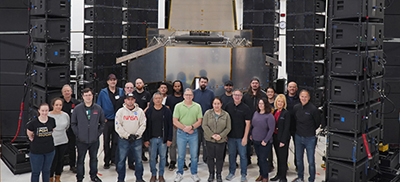
High Performance Vibration Testing for Large and Heavy Test Articles
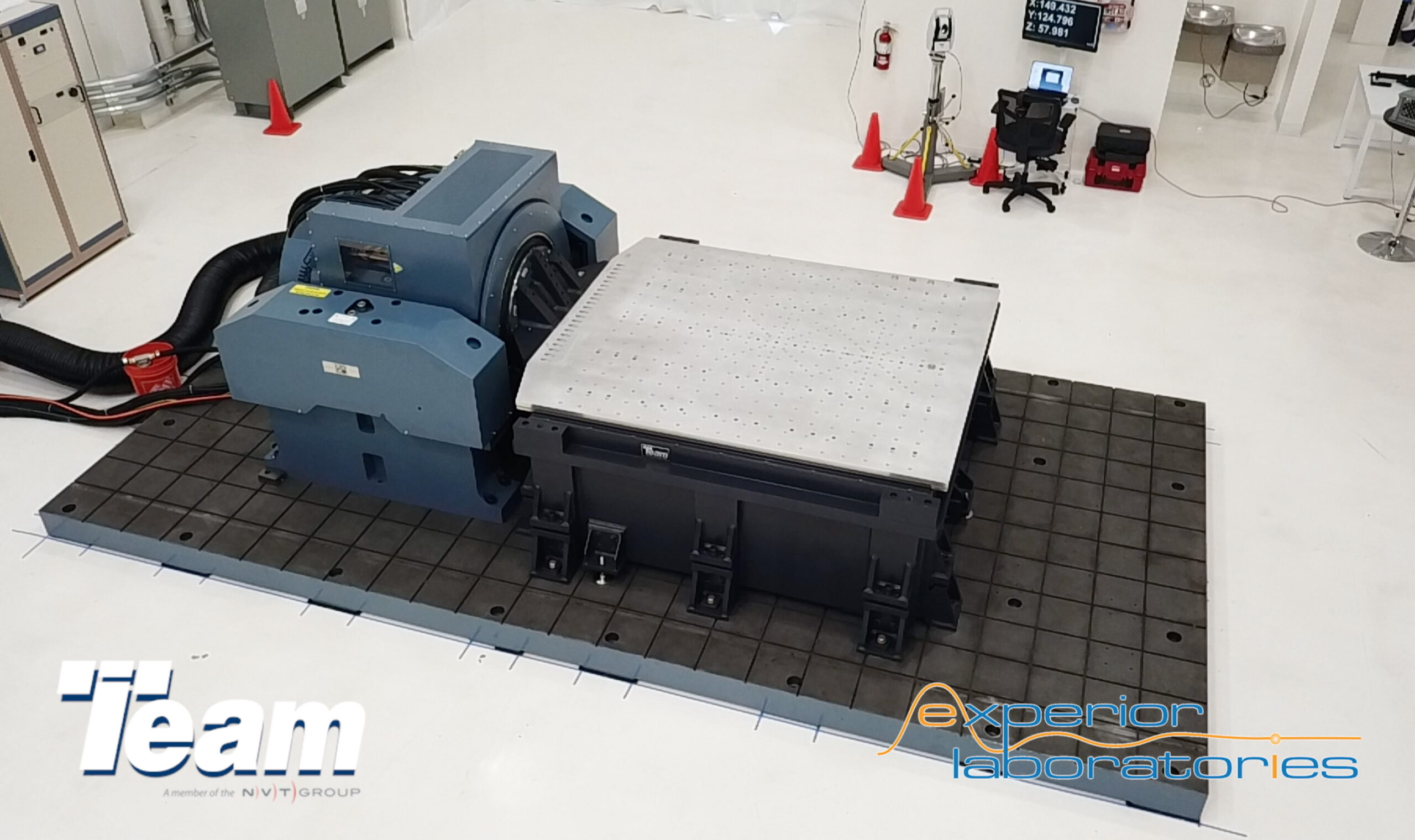
The newly installed system combines two test industry expert components, a new Unholtz Dickie T4000 vibration system and a TEAM T-Film Bearing slip table.
The TEAM T-Film bearings have several benefits overs standard oil film and linear bearings. The unique inverted T shape of TEAM bearings provides improved stiffness, load transfer and improved moment transfer to the reaction base. This minimizes slip plate deflection and cross axis vibration, as well as allows for test articles with a much higher overturning moment. The hydrostatic bearings have significantly increased load capability, meaning the table can accommodate much heavier test articles.
Acceleration Testing
The main advantage of the Sine Burst is that it is performed on a vibration system, the same vibration system that performs other tests such as random and/or sine sweep vibration and shock testing. Further, test article sizes can be much larger and heavier than in a Centrifuge. Performing all dynamic tests on the same vibration system reduces test costs and time.
Pyroshock
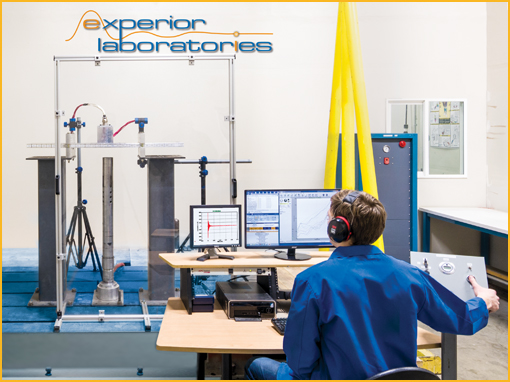
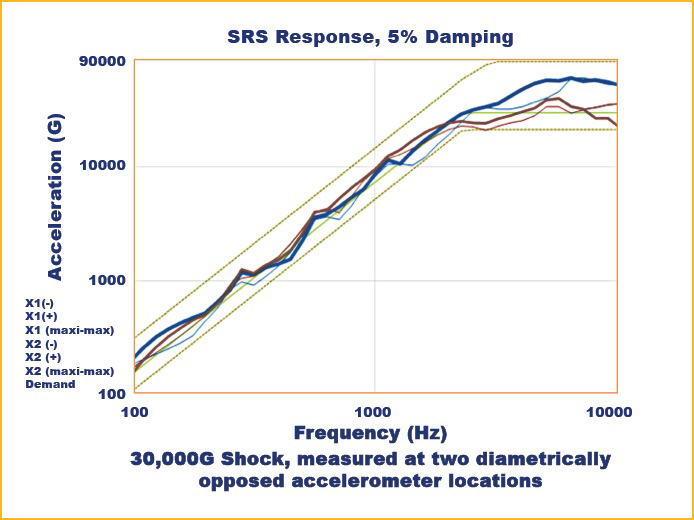
Experior Laboratories’ Kinetic Impact Pyroshock Simulation (KIPS) test systems are able to simulate near and midfield Pyroshock, experienced by components closest to a pyrotechnic event, using a high-speed impact to excite a tunable resonant beam. Adjusting the impact force, location and damping, this platform allows for highly customizable shock generation and the pneumatic systems allow for quick setup and reset.
Adjustable resonance allows boosting acceleration in only the desired frequency range. For shocks with a specified Te (event duration), adjustable muzzle velocity, impact mass, and custom damping materials allow us to customize shock duration while meeting acceleration requirements.
The KIPS test systems offer short transients, narrow differences between positive and negative SRS traces, and a uniform shock input that allows for near-equal measurements at multiple fixture mounting points.
Experior Labs has designed a wide variety of custom shock platforms and fixtures, and we’ve used frequency analysis software to identify mode shapes and resonant frequencies, which lets us prevent cross-axis acceleration and ensure that units are not over-tested.
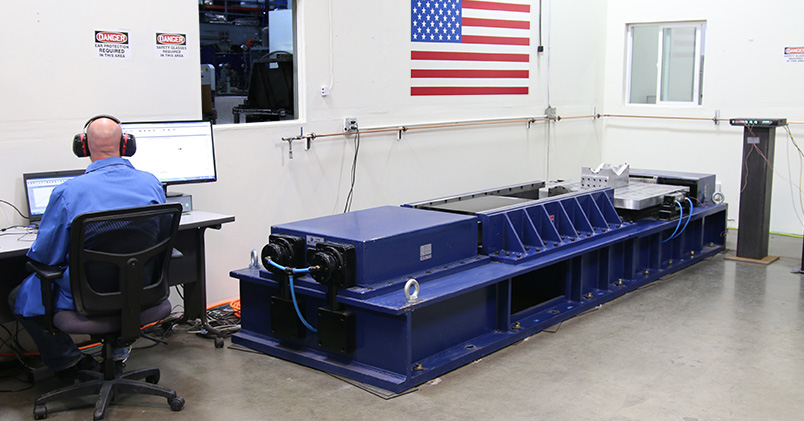
Horizontal Shock System
Shaker Shock
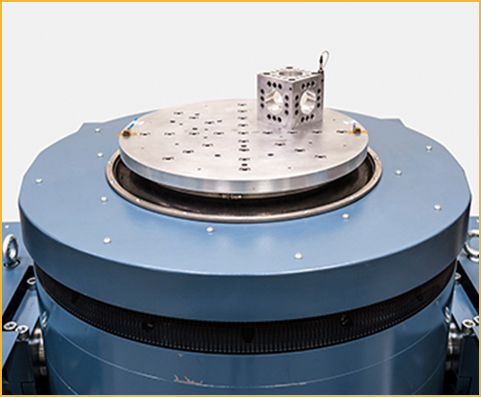
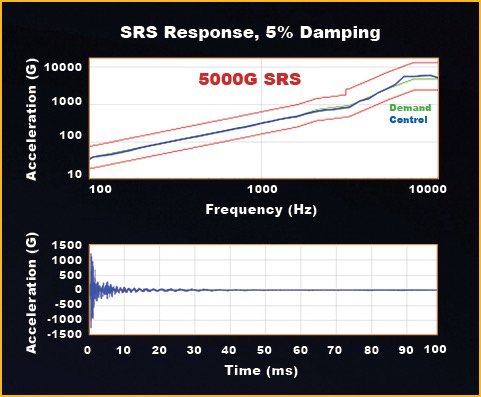
Experior Laboratories performs SRS Shock testing with levels up to 5000 G on the T2000 Shakers, making Experior Labs the industry leader in SRS Shaker Shock. Most test labs cannot offer Shaker Shock testing above 500 – 1,000 G SRS due to risk of shaker armature damage.
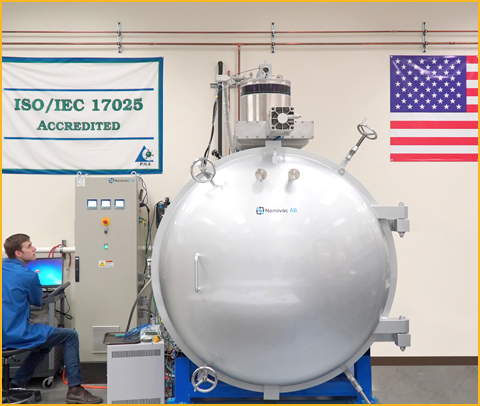
Thermal Vacuum
Fast Ramp Temperature Testing
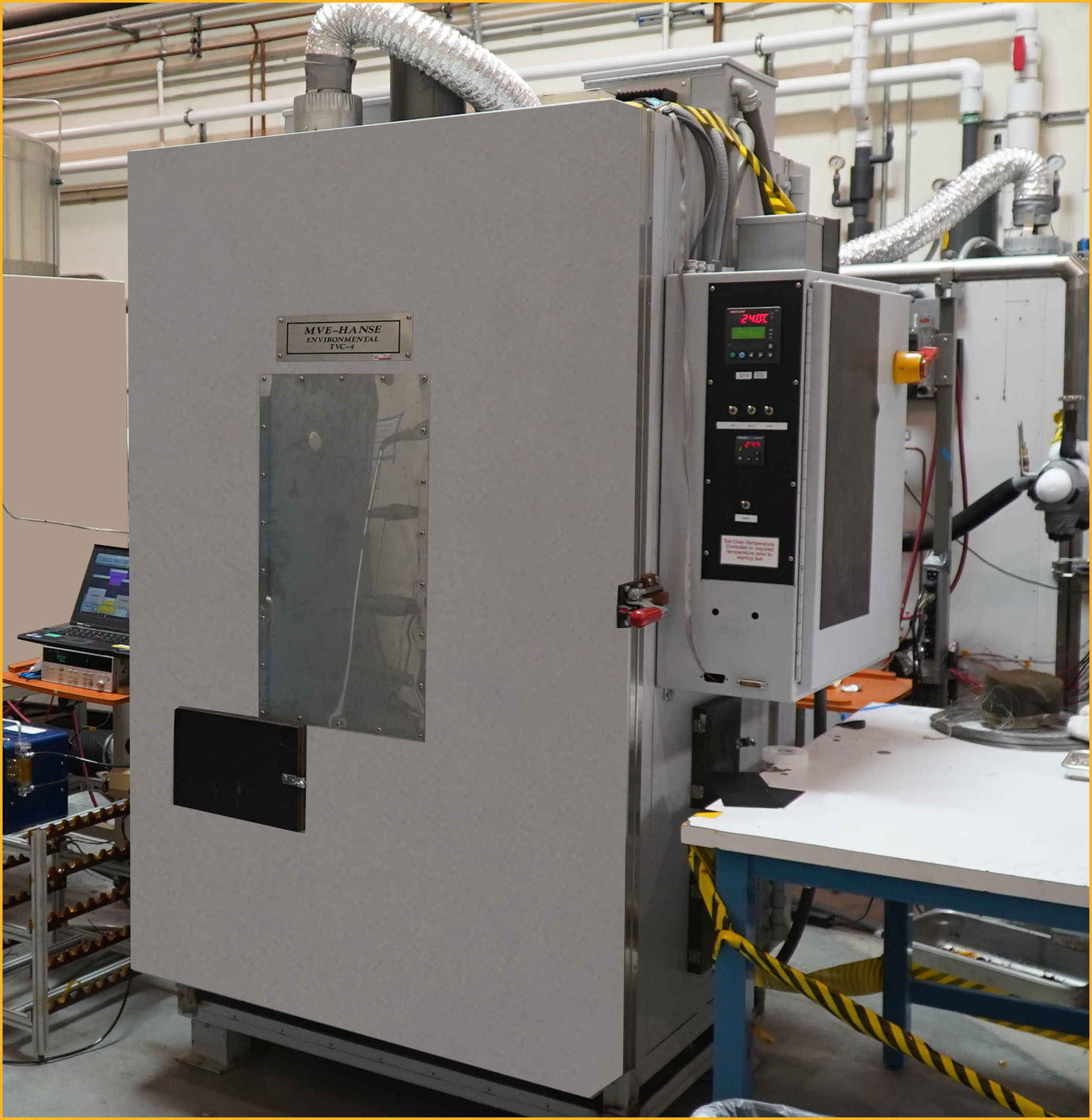
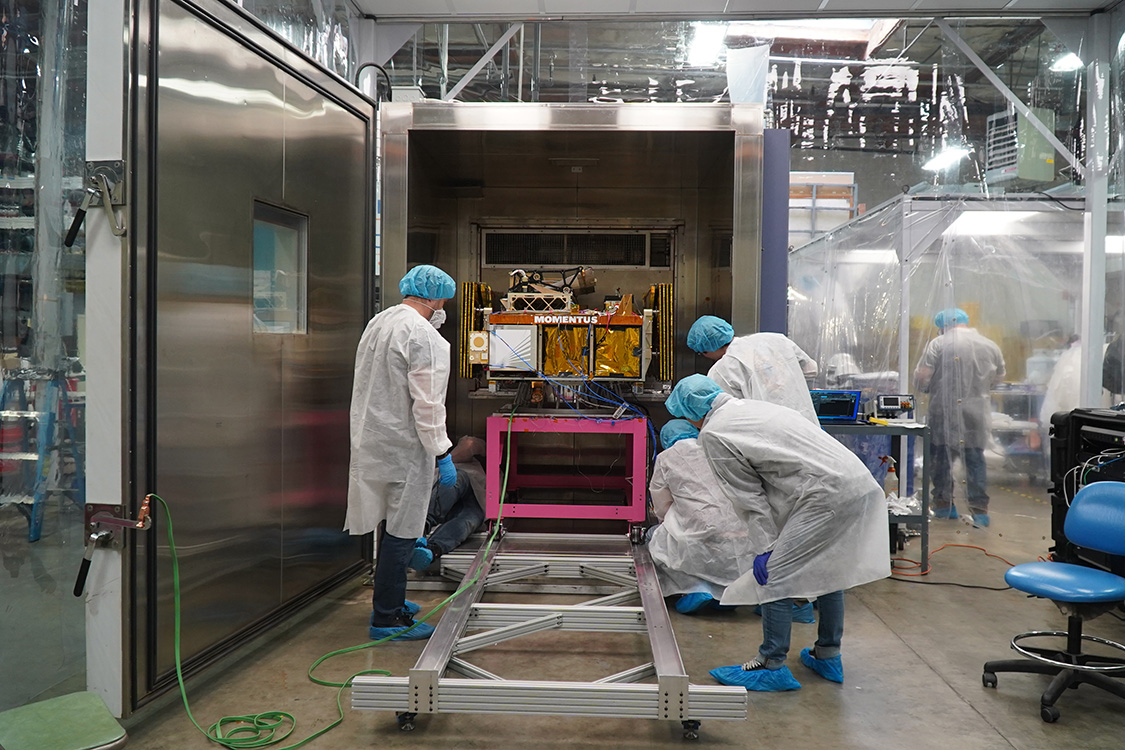
Experior Laboratories has several accelerated thermal chambers with high-flow blower motors and liquid nitrogen boost designed to transition temperature as quickly as possible, and are ideal for tests with demanding ramp rates.
Cryogenic
Temperature Testing
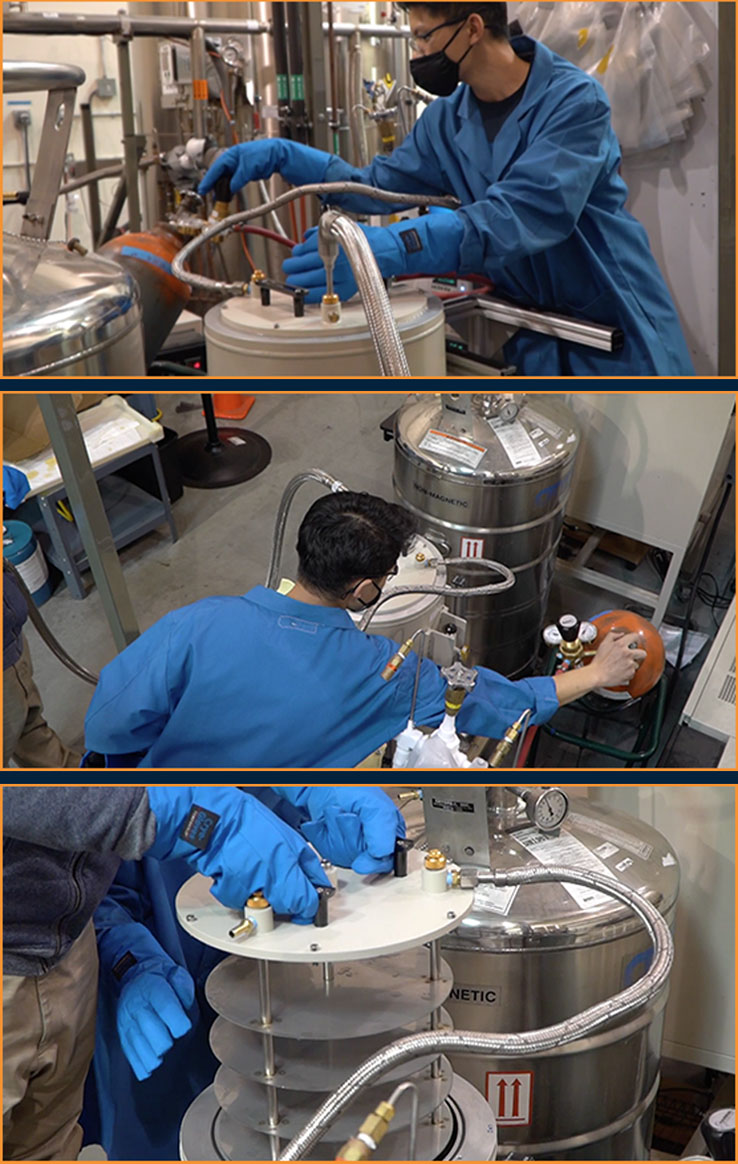
Experior Laboratories test facility can simulate extreme low cryogenic temperatures for aerospace, fiberoptic and electrical applications. Our cryogenic chambers have liquid nitrogen and liquid helium tanks piped in for rapid chilling and freezing temperatures.
Many space components require Cryogenics Testing for parts and instruments exposed to the extreme temperatures in rockets and orbit.
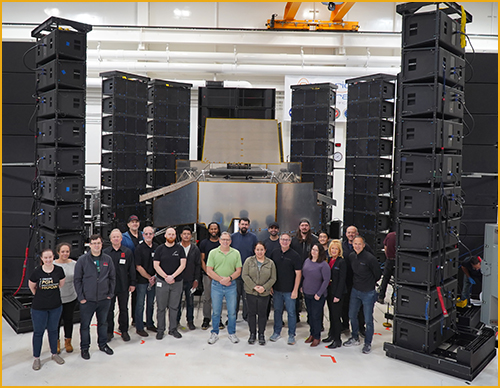
Direct Field Acoustic Testing DFAT / DFAN
Experior Laboratories collaborates with Direct Field Acoustic Testing experts with the mutual goal of offering the most comprehensive overall service portfolio and generating substantial impact for strategic proposals. This partnership of combined strengths promises to provide a superior client experience to our customers within the Military, Aerospace and Space industries
EMI/EMC/HIRF
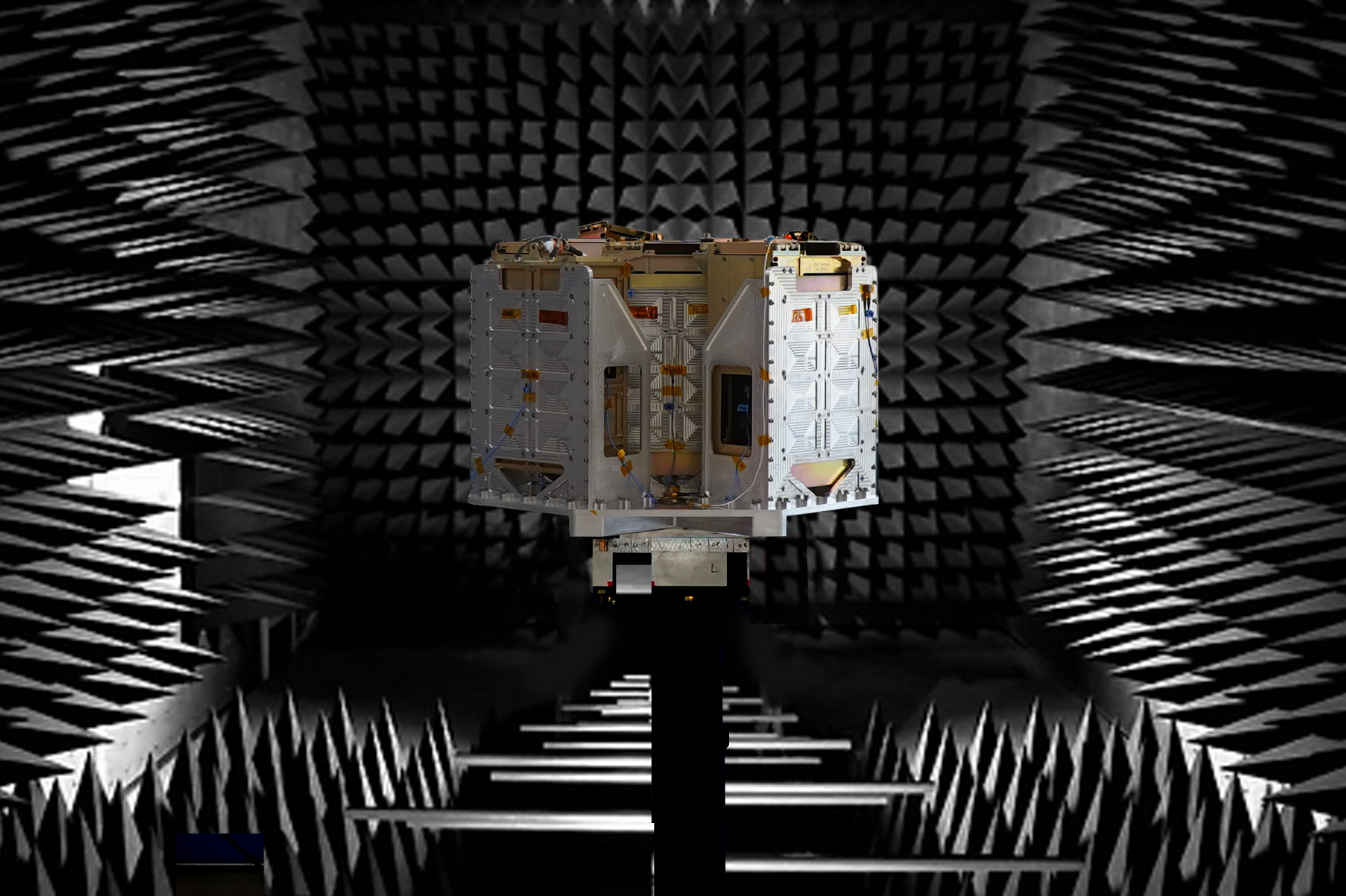
Experior Laboratories, Inc and DNB Engineering, Inc. are partnering with the mutual goal of offering the most comprehensive overall service portfolio and generating substantial impact for strategic proposals. The partnership promises to provide a superior client experience to our customers within the Aerospace, Military, Automotive, Telecommunication, and Medical industries.
Cleanroom Capacity
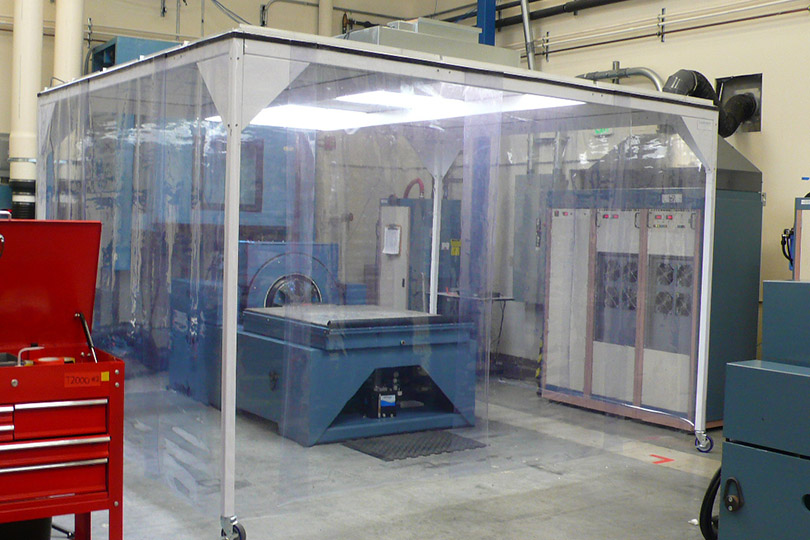
Experior Laboratories’ 11,000 square foot dynamics testing facility is an ISO8 / Class 100,000 compliant cleanroom, verified and monitored to operate within a temperature range of 71.6°F ± 5.4°F and humidity range of 45% ± 15%.
Portable Class 100,000 Cleanroom
Experior Labs also offers portable Class 100,000 cleanroom capability to turn any workspace into a cleanroom workspace.
Vibration & Shock Testing Expertise
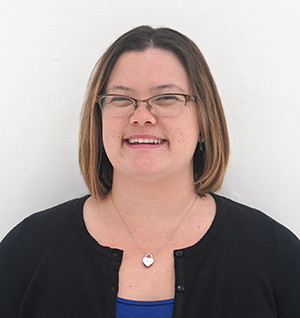
Grace Beech
Grace Beech is one of the project engineers at Experior Laboratories, primarily focused in Dynamics. She is responsible for most of the vibration testing and shock testing performed at Experior Labs. Grace manages various aspects of the vibration testing lab, including fixture design and evaluation, program management, vibration testing capability evaluation, shaker troubleshooting and maintenance, and scheduling.
Grace joined Experior Laboratories in 2014. She brought with her prior engineering experience from her work with Zodiac Aerospace’s business class seating segment, and also from her time as a manufacturing engineer in the vibration testing department at TriSep Corporation. She holds a Bachelor of Science degree in Mechanical Engineering from the University of California, Santa Barbara.
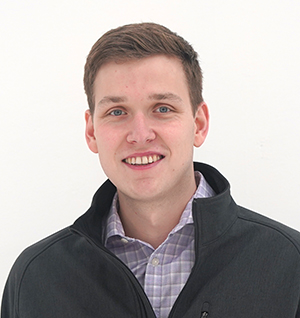
Gerrit Lane
Gerrit Lane joined the Experior Laboratories engineering team in 2015 and has since overseen the successful completion of over 150 environmental test programs. Specializing in dynamics testing and applications, Gerrit has led the design of Experior Laboratories’ pyroshock simulation test system (KIPS), and has designed several custom suites of standard fixtures for vibration testing and shock testing applications.
Gerrit holds a Bachelor of Science degree in Mechanical Engineering from the University of California, Los Angeles.
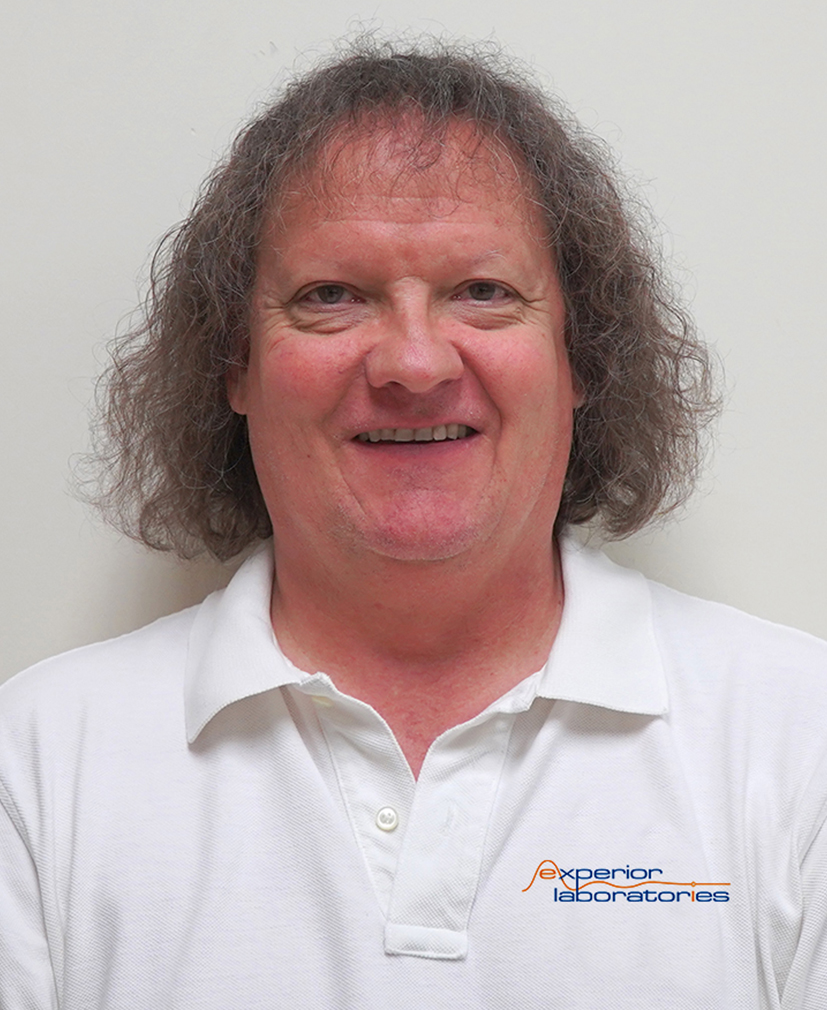
Kevin Sullivan
Kevin comes to Experior Laboratories with over thirty years’ experience in dynamic testing applications. During his career at Aerojet Rocketdyne he specialized in combined test environments including cryogenically conditioned and pressurized test articles associated with rocket engine components, and supported programs as diverse as the Space Shuttle, International Space Station, expendable rocket propulsion systems, and kinetic energy defense programs. Kevin holds a BSEE from the University of Wyoming.